

Youth arts programs on Long Island can help young people build more than artistic skill. They can support confidence, imagination, collaboration, communication, and a lifelong relationship with creativity.
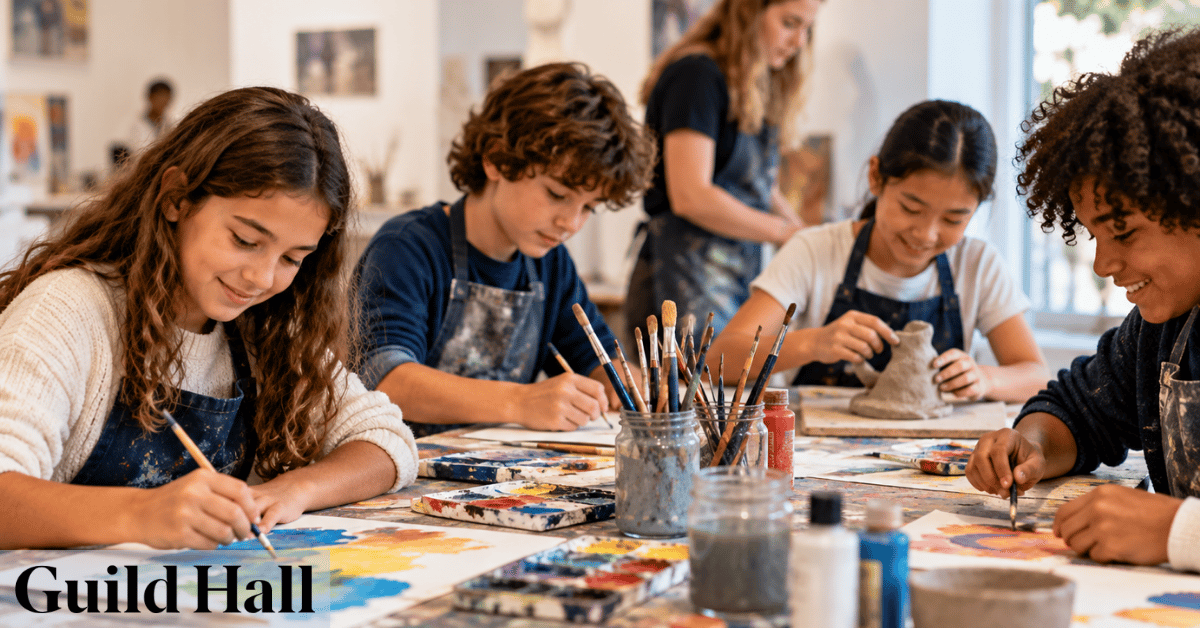
For children and teenagers, the arts provide space to explore ideas, ask questions, make choices, and express themselves in ways that may not always fit traditional classroom settings. A young person might begin with drawing, painting, movement, theater, writing, music, or hands-on experimentation. Over time, those experiences can shape how they think, communicate, and participate in their community.
At Guild Hall in East Hampton, learning programs, exhibitions, performances, public events, and community experiences give young creators meaningful ways to connect with the arts.
Youth Arts Programs on Long Island and Their Role in Creative Growth
Youth arts programs help young people understand creativity as something active.
Instead of only looking at art or watching performances, children and teens can participate. They can make, move, speak, write, rehearse, perform, observe, revise, and collaborate.
That active process matters.
A young person who joins an arts program may learn how to turn an idea into a project. They may become more comfortable sharing their perspective. They may discover that creativity is not about perfection, but about attention, practice, exploration, and courage.
Strong youth arts programs can support:
- Self-expression;
- Confidence;
- Imagination;
- Communication;
- Collaboration;
- Focus;
- Observation;
- Problem-solving;
- Cultural awareness.
These skills can help young people inside and outside the arts.
Why Young People Need Access to the Arts
Young people need access to the arts because creativity helps them understand themselves and the world around them.
Art gives children and teens a way to process ideas, feelings, questions, and experiences. It allows them to explore identity, community, memory, movement, sound, image, and story.
This access is especially important because not every young person learns in the same way.
Some students express themselves best through language. Others think visually. Some respond to movement, performance, music, design, or hands-on making. Arts programs create multiple pathways for young people to discover what feels meaningful to them.
Guild Hall’s learning programs offer families a place to explore creative education, cultural participation, and age-appropriate arts experiences in East Hampton.
How Arts Programs Build Confidence and Creative Voice
Confidence grows when young people feel that their ideas matter.
In youth arts programs, participants are often invited to make choices. They may decide how to use color, how to move, how to speak a line, how to shape a story, or how to respond to a prompt.
These choices help young people build creative voice.
A child who learns to trust their imagination may become more willing to try new things. A teenager who shares a performance or artwork may become more comfortable expressing ideas in front of others. A young person who receives thoughtful feedback may learn how to revise without giving up.
Guild Hall’s article on teen arts programs in East Hampton explores this confidence-building process in more detail for older young creators.
Visual Art, Performance, Writing, Movement, and Multidisciplinary Learning
Youth arts programs can take many forms.
Some young people connect first through visual art. They may enjoy drawing, painting, sculpture, collage, photography, or mixed media. Others may respond to performance, theater, music, dance, storytelling, comedy, or writing.
Multidisciplinary learning can be especially valuable because it allows young people to explore creativity from different angles.
A program might begin with a museum visit, continue with a writing exercise, include movement, and end with a shared discussion. Another might connect a performance with visual design or storytelling.
This variety helps young people understand that creativity is not limited to one discipline.
Guild Hall’s exhibitions, performances, learning programs, and public events create opportunities for young people to experience art across forms. Families can explore current and upcoming exhibitions and Performing Arts at Guild Hall to see how different creative practices appear across the calendar.
From Children to Teens: Supporting Creativity at Every Stage
Creative development changes as young people grow.
Children often begin with play, imagination, color, movement, and discovery. They may explore materials freely and learn through experimentation. For them, art can be a way to build curiosity and confidence from an early age.
Teenagers may need something different. They often benefit from programs that give them more voice, independence, and space to explore identity. They may want to discuss ideas, develop projects, collaborate with peers, or connect creativity with larger questions about community, culture, and the future.
Both stages matter.
Guild Hall’s article on art classes for kids in East Hampton focuses on younger children, while teen arts programs in East Hampton explores how creative opportunities help older young people build confidence and self-expression.
Together, these stages show how youth arts programs can support growth over time.
How Guild Hall Helps Young Creators Connect With Culture
Guild Hall gives young creators access to a broader cultural environment.
A youth arts experience can become more meaningful when it is connected to exhibitions, performances, artist talks, workshops, and public events. Young people can see that art is not isolated from real life. It is connected to community, history, performance, identity, careers, and public conversation.
A young person might attend a workshop, visit an exhibition, see a performance, or join a learning program. Each experience can open a different door into creativity.
This matters because young people often need to see creative life in action.
When they encounter artists, performers, educators, curators, and cultural spaces, they begin to understand that creativity can be practiced, shared, discussed, and sustained.
Guild Hall’s article on how museums help artists grow their careers can help older students and families understand how cultural institutions support artists beyond the classroom.
Why Youth Arts Programs Strengthen Creative Communities
Youth arts programs do not only benefit individual participants. They also strengthen communities.
When young people engage with the arts, they become part of a larger cultural conversation. They bring new perspectives, questions, energy, and imagination into community life.
This helps keep cultural spaces alive across generations.
A community that supports young creators is investing in future artists, audiences, educators, performers, designers, writers, cultural leaders, and engaged citizens.
Guild Hall’s article on How Arts and Culture Strengthen Community Connections explores how shared creative experiences help people connect through culture.
Youth arts programs extend that idea by helping young people feel that they belong inside cultural spaces, not outside them.
Creative Workshops as an Entry Point for Young People
Workshops can be a useful entry point into youth arts programs.
A workshop may feel less intimidating than a long-term class. It can give young people a chance to try something new, meet others, and explore a creative idea in a focused setting.
For some children and teens, a single workshop can spark a deeper interest. A drawing activity may lead to museum visits. A performance exercise may lead to theater. A writing prompt may lead to storytelling. A movement workshop may lead to dance.
Guild Hall’s article on creative workshops in East Hampton explores how hands-on experiences help people connect more actively with art, performance, and learning.
What Families Should Look for in a Youth Arts Program
Families looking for youth arts programs on Long Island may want to consider both the activity and the environment.
A strong program should feel welcoming, age-appropriate, flexible, and encouraging. It should give young people room to participate at their own pace while still offering thoughtful guidance.
Helpful questions include:
- Is the program designed for the young person’s age group?
- Does it encourage creativity as well as skill-building?
- Are participants invited to make choices?
- Does it support collaboration and individual expression?
- Is the environment welcoming and accessible?
- Does the program connect to exhibitions, performances, artists, or cultural ideas?
- Does it help young people build confidence over time?
The best programs help young people feel capable, curious, and respected.
For families thinking about access and comfort, Guild Hall’s article on accessible arts in East Hampton Village offers a helpful related perspective.
Youth Arts, Wellness, and Belonging
Youth arts programs can also support well-being and belonging.
Creative experiences give young people a way to focus, reflect, and connect with others. They may help a child feel proud of something they made. They may help a teenager express an idea that is difficult to say directly. They may help participants feel less alone by creating alongside others.
This does not mean art replaces professional support when needed. But creative participation can still support everyday well-being by encouraging presence, confidence, and connection.
Guild Hall’s article on art and wellness in East Hampton explores how creative experiences can support reflection and connection across different ages.
Planning a Creative Visit to Guild Hall With Young People
Guild Hall is located at:
Families planning a creative visit with young people may want to review program details, recommended ages, registration information, accessibility, parking, arrival timing, and event length.
It can also help to include young people in the planning process. Let them look at the calendar, choose between programs, or decide whether they are more interested in visual art, performance, hands-on learning, or public events.
Explore Youth Arts and Learning Opportunities at Guild Hall
Youth arts programs on Long Island help young creators build confidence, imagination, collaboration, and a lifelong connection to creativity.
At Guild Hall, young people and families can engage with exhibitions, performances, learning programs, workshops, public conversations, and cultural events that make the arts feel active and accessible.
Whether a child is beginning to explore creativity or a teenager is developing a stronger artistic voice, Guild Hall offers meaningful ways to connect with the arts in East Hampton.
Explore learning programs, view current and upcoming exhibitions, discover Performing Arts at Guild Hall, review upcoming programs and events, or plan your visit to Guild Hall today.
For broader context on the importance of arts learning and youth participation, the National Endowment for the Arts provides resources related to arts education, creative participation, and public access to the arts.