

Creative workshops in East Hampton give visitors, residents, families, teens, and adults a way to experience the arts through participation, not only observation.
A workshop can turn culture into something active. Instead of only looking at an exhibition, watching a performance, or listening to a conversation, participants can make, move, write, speak, experiment, collaborate, and try something new.
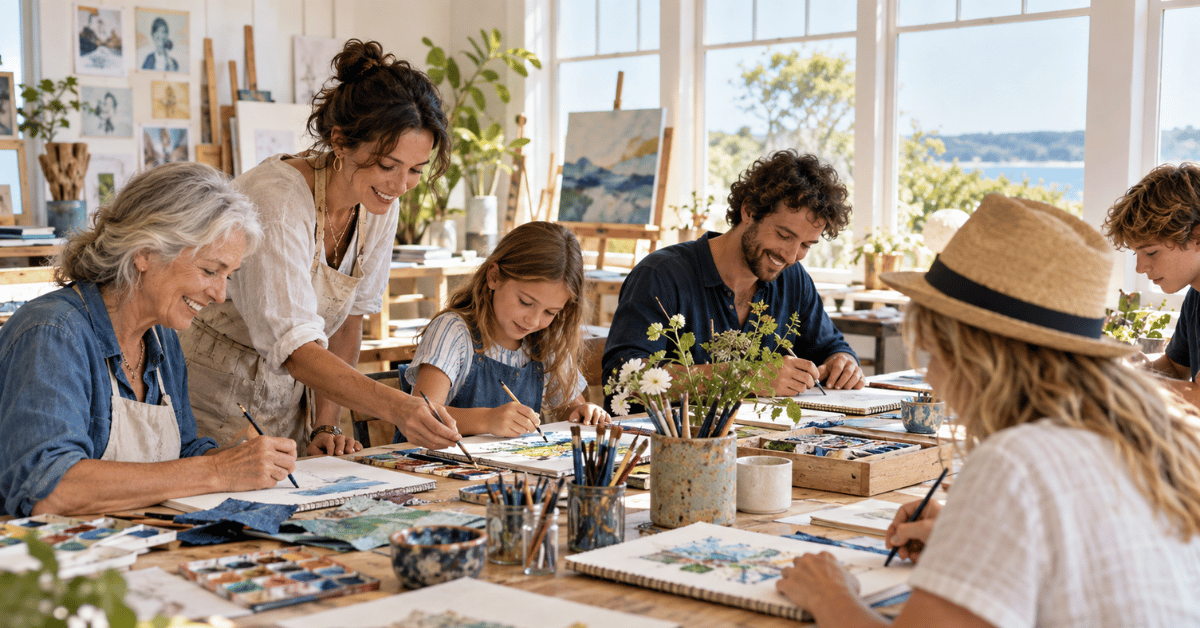
At Guild Hall in East Hampton, creative learning connects naturally with exhibitions, performances, public programs, community events, and hands-on cultural experiences. This makes workshops part of a wider creative ecosystem, not just a standalone activity.
For people who want to engage with art more personally, creative workshops can offer a meaningful entry point.
Creative Workshops in East Hampton for Hands-On Cultural Experiences
Creative workshops are valuable because they invite people to participate.
A visitor may come to East Hampton for a museum exhibition, performance, public talk, or cultural event. A workshop can deepen that experience by giving the person a way to respond creatively.
That response might take many forms:
- drawing;
- painting;
- writing;
- movement;
- performance;
- storytelling;
- discussion;
- design;
- mixed media;
- collaborative making.
The goal is not always to master a technique. Often, the value comes from trying, noticing, experimenting, and connecting ideas through action.
Guild Hall’s learning programs offer a natural starting point for people interested in creative participation in East Hampton.
What Makes a Creative Workshop Different From a Traditional Class?
A creative workshop is often more flexible than a traditional class.
A class may focus on skill development over time. A workshop may be shorter, more exploratory, or connected to a specific theme, exhibition, artist, performance, or community program.
Both formats can be valuable, but they serve different purposes.
A traditional class might help someone build technique step by step. A workshop might help someone explore an idea, try a new material, respond to an artwork, or participate in a shared creative process.
Creative workshops are especially useful for people who may not see themselves as artists. They provide a welcoming environment where participants can begin without pressure.
This makes them accessible to adults, teens, families, children, and visitors who are curious but unsure where to start.
Readers looking for more class-based creative learning can also explore Guild Hall’s article on Art Classes in East Hampton for Adults and Teens.
Why Hands-On Learning Helps People Connect With Art
Hands-on learning changes the way people understand art.
When someone tries to make something, they begin to notice the decisions behind creative work. They may pay more attention to color, gesture, material, rhythm, composition, voice, timing, or space.
This can make exhibitions and performances feel more meaningful.
After trying a drawing exercise, a visitor may look at a painting differently. After participating in a movement workshop, they may watch dance with more attention. After writing from a prompt, they may listen to a public reading or performance with new awareness.
Creative workshops help bridge the gap between audience and artist.
They remind participants that art is not only something finished and displayed. It is also a process of exploration, revision, attention, and choice.
Guild Hall’s article on how to visit an art museum offers related guidance for slowing down and engaging more deeply with exhibitions.
Art, Performance, Writing, Movement, and Multidisciplinary Workshops
Creative workshops in East Hampton can take many forms.
Some may focus on visual art, such as drawing, painting, collage, sculpture, or mixed media. Others may explore performance, storytelling, theater, dance, writing, voice, or movement.
Multidisciplinary workshops can be especially engaging because they allow participants to combine forms. A workshop might begin with an artwork, move into discussion, include writing, and end with a shared creative response.
This kind of structure helps people understand that creativity does not belong to one discipline only.
Visual art can connect to performance. Performance can connect to memory. Writing can connect to movement. Conversation can become part of the creative process.
Guild Hall’s range of exhibitions, performances, learning programs, and public events makes this kind of cross-disciplinary connection especially natural.
Visitors can explore current and upcoming exhibitions and Performing Arts at Guild Hall to see how different forms of creativity appear across the calendar.
Creative Workshops for Adults, Teens, Families, and Young Learners
Creative workshops can meet different people in different ways.
For adults, a workshop may offer a way to reconnect with creativity, try a new medium, or step away from routine. For teens, it may provide space to build confidence, identity, and voice. For families, it can become a shared experience. For children, it can support imagination, play, and early creative development.
This flexibility makes workshops useful across ages.
A single creative setting can encourage participants to observe, ask questions, make choices, and respond to others. That process can be especially meaningful when people participate together.
Families can explore Guild Hall’s article on family art activities in the Hamptons, while parents of younger children may find the guide to art classes for kids in East Hampton helpful.
For older young people, Guild Hall’s article on teen arts programs in East Hampton explores how creative opportunities can support confidence and self-expression.
How Workshops Support Confidence, Curiosity, and Well-Being
A creative workshop can support confidence because it gives people permission to try.
Many adults and children hesitate around art because they worry about being “good” at it. Workshops can help shift attention away from perfection and toward process.
Participants may begin to ask:
- What do I notice?
- What happens if I try this?
- How does this material respond?
- What story am I exploring?
- What choices feel interesting?
- What can I learn from someone else’s approach?
This kind of inquiry builds curiosity.
Creative participation can also support well-being by encouraging presence, focus, and reflection. A workshop asks participants to pay attention to what they are doing in the moment. That attention can feel grounding.
Guild Hall’s article on art and wellness in East Hampton explores how creative experiences can support reflection, connection, and everyday well-being.
How Guild Hall Connects Workshops With Exhibitions and Performances
Workshops can become more meaningful when they are connected to a larger cultural context.
At Guild Hall, a creative workshop may relate naturally to exhibitions, performances, public conversations, community programs, or learning initiatives. This connection helps participants see how their own creative exploration fits within a wider arts environment.
A person might attend an exhibition and then join a related workshop. A family might see a performance and later explore storytelling or movement. A teen might attend a public program and become curious about creative careers or artistic process.
This kind of connection makes cultural participation feel layered.
Visitors are not only consuming art. They are entering into a relationship with it.
Guild Hall’s upcoming programs and events can help visitors find programs that connect with their interests.
Creative Workshops as Community Experiences
Workshops are often social experiences.
Even when participants work individually, they share a space, a prompt, a material, or a question. They may see how others approach the same activity in different ways. That can create a sense of connection.
This community aspect is part of what makes workshops valuable.
People may arrive as strangers but leave having shared a creative process. They may discuss what they made, ask questions, offer encouragement, or simply experience the comfort of making something alongside others.
Creative workshops can help people feel part of a cultural community, especially in a place like East Hampton where local residents, seasonal visitors, families, artists, and audiences often meet through the arts.
Guild Hall’s article on How Arts and Culture Strengthen Community Connections explores this broader role of the arts in bringing people together.
Readers can also explore social art in East Hampton for more on creativity as a shared experience.
What to Look for Before Joining a Creative Workshop
Before joining a creative workshop, participants may want to consider what kind of experience they want.
Some workshops may be quiet and reflective. Others may be active, social, performance-based, or collaborative. Some may focus on a specific material or skill, while others may be more open-ended.
Helpful questions include:
- Is the workshop designed for my age group or experience level?
- Does it require previous experience?
- Is it hands-on, discussion-based, performance-based, or mixed?
- What materials or preparation are needed?
- How long is the session?
- Is the setting quiet, active, or social?
- Does it connect with an exhibition, performance, or public program?
- Are accessibility details available?
These questions can help participants choose an experience that feels comfortable and meaningful.
For practical details before attending Guild Hall, visitors can review the visitor information page.
Accessible and Welcoming Creative Learning
Creative workshops work best when participants feel welcome.
A supportive workshop environment helps people ask questions, take creative risks, and participate at their own pace. This is especially important for people who may feel nervous about making art or joining a group activity.
Accessibility also matters. Clear information about location, arrival, seating, mobility, materials, timing, and participation expectations can make the experience easier to enjoy.
Guild Hall’s article on accessible arts in East Hampton Village explores the importance of making cultural experiences open and welcoming.
Creative learning should not feel intimidating. It should invite people in.
Planning a Creative Visit to Guild Hall in East Hampton
Guild Hall is located at:
Before attending a workshop or related cultural program, visitors may want to review the schedule, registration details, program length, accessibility, parking, and arrival timing.
A creative visit can also be combined with an exhibition, performance, public talk, or community event. This can turn a single workshop into part of a fuller cultural day in East Hampton.
This local route connects a community learning landmark with Guild Hall’s museum, performance, learning, and public program spaces on Main Street.
Review the official details before you plan your visit to Guild Hall.
Explore Creative Workshops and Learning Programs at Guild Hall
Creative workshops in East Hampton offer a hands-on way to experience art, performance, learning, and community.
At Guild Hall, visitors can connect with the arts through exhibitions, performances, learning programs, public events, and creative opportunities that invite participation.
Whether you are an adult looking to reconnect with creativity, a teen exploring your voice, a family planning a shared cultural experience, or a visitor curious about hands-on learning, Guild Hall offers meaningful ways to engage.
Explore learning programs, view current and upcoming exhibitions, discover Performing Arts at Guild Hall, review upcoming programs and events, or plan your visit to Guild Hall in East Hampton.
For broader context on creative learning and public participation in the arts, organizations such as the National Endowment for the Arts support access to arts education, community arts participation, and cultural engagement.