

Art classes for kids in East Hampton can give children a meaningful way to explore color, shape, movement, imagination, and self-expression. More than a simple activity, creative learning can help young artists build confidence, curiosity, patience, and a lasting connection to the arts.
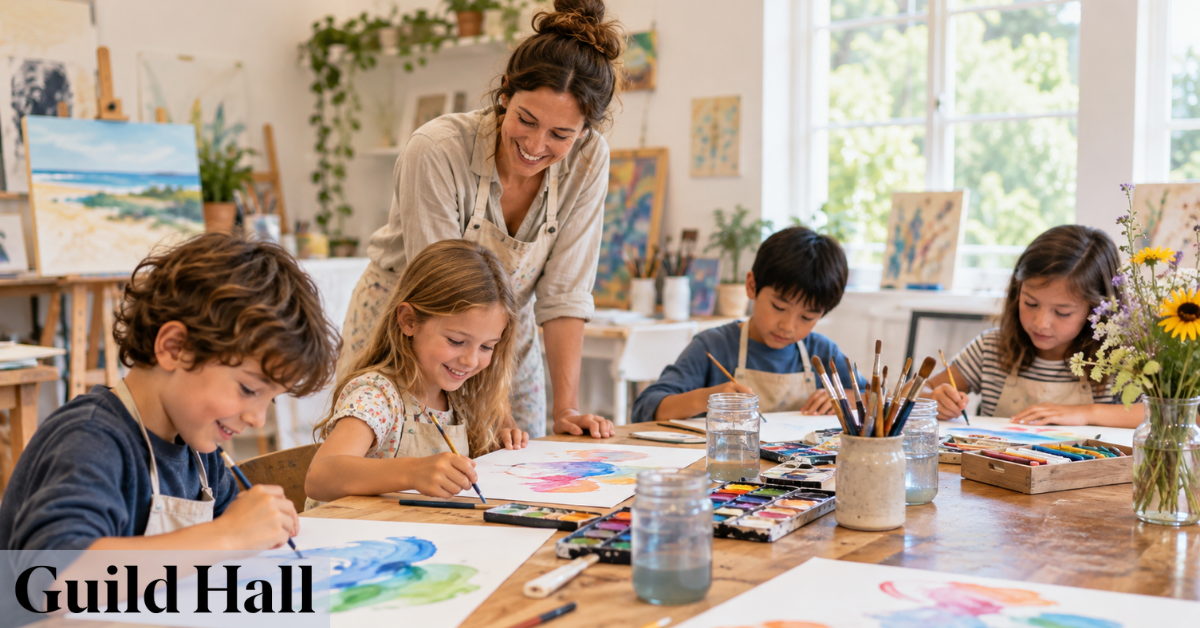
For children, art often begins with discovery. A brush, pencil, piece of clay, costume, stage, or museum visit can open a new way of seeing the world. Creative programs allow kids to ask questions, make choices, try ideas, and learn that their perspective matters.
At Guild Hall in East Hampton, families can connect children with exhibitions, learning programs, performances, public events, and cultural experiences that make the arts feel accessible from an early age.
Art Classes for Kids in East Hampton That Encourage Creativity
Art classes for kids should do more than keep children busy.
A strong creative program gives children space to experiment. It encourages them to notice details, use their imagination, work with materials, and express ideas in their own way.
For younger children, that might mean exploring color, texture, movement, and simple storytelling. For older children, it might mean developing more focused creative skills, learning how artists make choices, or responding to exhibitions and performances.
The best kids’ art experiences often combine structure with freedom. Children benefit from guidance, but they also need room to make discoveries.
That balance can help young artists feel proud of what they create, even when the final result is imperfect or unexpected.
Families looking for broader creative experiences can also explore Guild Hall’s guide to family art activities in the Hamptons.
Why Creative Learning Matters for Children
Creative learning helps children develop skills that extend beyond art.
When children make art, they practice observation, problem-solving, patience, focus, and decision-making. They learn that there can be more than one way to approach an idea. They also learn that mistakes can become part of the process.
This is especially important because many school and daily-life environments are built around correct answers. Art gives children a different kind of learning experience.
A child can ask:
- What happens if I mix these colors?
- How can I show this feeling?
- What shape should come next?
- What story does this image tell?
- What do I notice when I look closely?
- How can I change this if it is not working?
These questions help children think creatively and independently.
Guild Hall’s learning programs offer families a place to explore creative education through age-appropriate arts experiences, workshops, and cultural engagement.
How Art Helps Kids Build Confidence and Imagination
Children build confidence when they see that their ideas have value.
In an art class or creative program, a child does not need to create something perfect. The goal is to try, explore, notice, and continue. That process can help children become more comfortable making choices and sharing their work.
Art also strengthens imagination.
A blank page can become a landscape, a character, a memory, a dream, or an abstract idea. A performance activity can help a child step into a story. A museum visit can invite a young person to imagine what an artist was thinking or feeling.
This kind of imaginative practice matters. It helps children see possibilities.
For families with older children, Guild Hall’s article on teen arts programs in East Hampton explores how creative programs continue to support confidence, identity, and self-expression as young people grow.
Museum Visits, Making, and Looking Closely
Art classes for kids can become even more meaningful when they connect with museum experiences.
Looking at art helps children understand that creativity takes many forms. A painting, sculpture, photograph, costume, performance, or installation can show a child that artists use different materials and ideas to communicate.
A museum visit can also help children slow down.
Instead of moving quickly from one image to the next, children can be invited to look closely. They can notice colors, patterns, shapes, textures, people, objects, and emotions.
Helpful questions include:
- What is the first thing you notice?
- What colors stand out?
- What do you think is happening?
- What would you ask the artist?
- How does this artwork make you feel?
- What would you make after seeing this?
Guild Hall’s article on how to visit an art museum offers practical ideas for making museum visits more engaging and thoughtful.
Families can also explore current and upcoming exhibitions before visiting Guild Hall.
What Parents Should Look for in a Kids’ Art Program
Parents looking for art classes for kids in East Hampton may want to consider more than the activity title.
A good children’s art program should feel welcoming, age-appropriate, flexible, and encouraging. It should give children enough structure to feel supported while still allowing room for play and exploration.
Parents may want to ask:
- Is the program designed for the child’s age group?
- Does it encourage imagination as well as skill-building?
- Are children allowed to make choices?
- Does the program feel supportive rather than overly focused on perfection?
- Can kids explore different materials or forms of expression?
- Is the environment welcoming and accessible?
- Does the experience connect with exhibitions, performances, or cultural ideas?
The strongest programs help children feel capable. They encourage curiosity instead of pressure.
For parents interested in broader accessibility considerations, Guild Hall’s article on accessible arts in East Hampton Village offers a helpful related perspective.
Art, Play, and Early Creative Development
For children, play is not separate from learning.
Play allows kids to test ideas, imagine roles, invent stories, move their bodies, and understand the world through action. Art naturally supports this process.
A child painting with broad brushstrokes is learning about movement and color. A child building with materials is learning about form and balance. A child acting out a scene is learning about emotion, language, and perspective.
Creative play can also help children become more comfortable with uncertainty.
They may not know what they are making at first. They may change direction. They may discover something unexpected. This flexibility is part of the value of art.
In a world where children are often asked to perform or achieve, creative programs can give them permission to explore.
How Guild Hall Supports Creative Learning for Young Visitors
Guild Hall gives families a cultural setting where children can encounter the arts in multiple ways.
A child might visit an exhibition, attend a performance, participate in a learning program, or join a community event. Each experience offers a different entry point into creativity.
This variety matters because children do not all connect with art in the same way.
Some children love drawing and painting. Others respond to movement, music, storytelling, theater, or hands-on activities. Some may be quiet observers at first. Others may want to participate immediately.
Guild Hall’s combination of museum, performance, education, and public programming allows families to find creative experiences that match a child’s interests and comfort level.
Families can review upcoming programs and events to see what is currently available.
Connecting Kids’ Art Classes With Family Cultural Experiences
Art classes for kids can become part of a larger family cultural rhythm.
A child might take part in a creative program and then visit an exhibition. A family might attend a performance and later talk about the characters, movement, music, or visual design. A museum visit might inspire a drawing session at home.
These connections help children understand that art is not limited to one classroom or one activity.
It can be part of everyday life.
Parents can support this by asking simple follow-up questions after a creative experience:
- What did you enjoy making?
- What was difficult?
- What surprised you?
- What would you try next time?
- Did anything remind you of something we saw before?
- Would you want to make something like this again?
This kind of conversation helps children reflect on their creative process.
Guild Hall’s article on art and wellness in East Hampton also explores how creative experiences can support reflection, presence, and well-being across different ages.
When Kids Are Ready for More Focused Creative Learning
As children grow, some may want more focused creative opportunities.
They may become interested in drawing, painting, sculpture, theater, music, dance, writing, or design. Others may not choose a specific path but still benefit from continued exposure to the arts.
This is where age-appropriate progression matters.
Younger children may need more play-based exploration. Older children may enjoy learning techniques, studying artists, discussing ideas, or developing projects over time.
For families with children moving into adolescence, Guild Hall’s article on teen arts programs in East Hampton offers a natural next step.
Readers can also explore Guild Hall’s article on Art Classes in East Hampton for Adults and Teens for broader creative learning opportunities.
Performance, Storytelling, and Creative Expression for Kids
Children’s creativity is not limited to visual art.
Performance, storytelling, movement, and music can also help children express themselves. Theater and performance-based experiences can help kids build confidence, listen to others, use their bodies, and explore emotion through character and story.
For some children, performance may feel more natural than drawing or painting. For others, it may take time to feel comfortable. Both responses are valid.
Creative programs that include movement, voice, rhythm, or storytelling can help children develop communication skills in a playful and supportive way.
Guild Hall’s article on theater education in East Hampton offers a related look at how performance-based learning can support confidence and creativity.
Families interested in live performance can also explore Performing Arts at Guild Hall.
Making Art Feel Welcoming, Not Intimidating
Some children immediately feel comfortable making art. Others may worry about whether they are “good” at it.
A supportive art class helps children move away from that fear.
Instead of asking children to produce perfect work, creative programs can help them focus on process. What did they try? What did they notice? What changed? What choice did they make? What would they like to explore again?
This approach can make art feel welcoming.
It also helps children understand that artists experiment. They revise. They make mistakes. They keep looking and trying.
When children learn this early, they may become more willing to take creative risks in the future.
Planning a Visit to Guild Hall With Children
Guild Hall is located at:
Before visiting with children, families may want to review program details, recommended ages, accessibility, parking, arrival time, and event length.
It can also help to prepare children gently before the visit. Let them know where they are going, what kind of activity they may experience, and how long the visit might last.
For younger children, shorter visits may work best. For older children, families may want to build in time for conversation, questions, or a related activity afterward.
Review the official details before you plan your visit to Guild Hall.
Explore Creative Programs for Kids at Guild Hall
Art classes for kids in East Hampton can help young artists build imagination, confidence, curiosity, and creative habits that last beyond a single activity.
At Guild Hall, families can connect children with exhibitions, learning programs, performances, and cultural experiences that make the arts feel welcoming and alive.
Whether a child is just beginning to explore creativity or already shows a strong interest in art, Guild Hall offers meaningful ways to experience the arts in East Hampton.
Explore learning programs, view current and upcoming exhibitions, review upcoming programs and events, or plan your visit to Guild Hall today.
For broader context on the importance of arts learning for young people, organizations such as the National Endowment for the Arts support public access to the arts, arts education, and creative participation.