

The story of Hamptons art history is not only about famous names or beautiful landscapes. It is about the way a coastal region became a lasting home for artists, collectors, performers, writers, cultural institutions, and audiences.
Over time, the East End of Long Island became more than a summer destination. It became a place where artists could work, experiment, gather, exhibit, perform, and build creative communities.
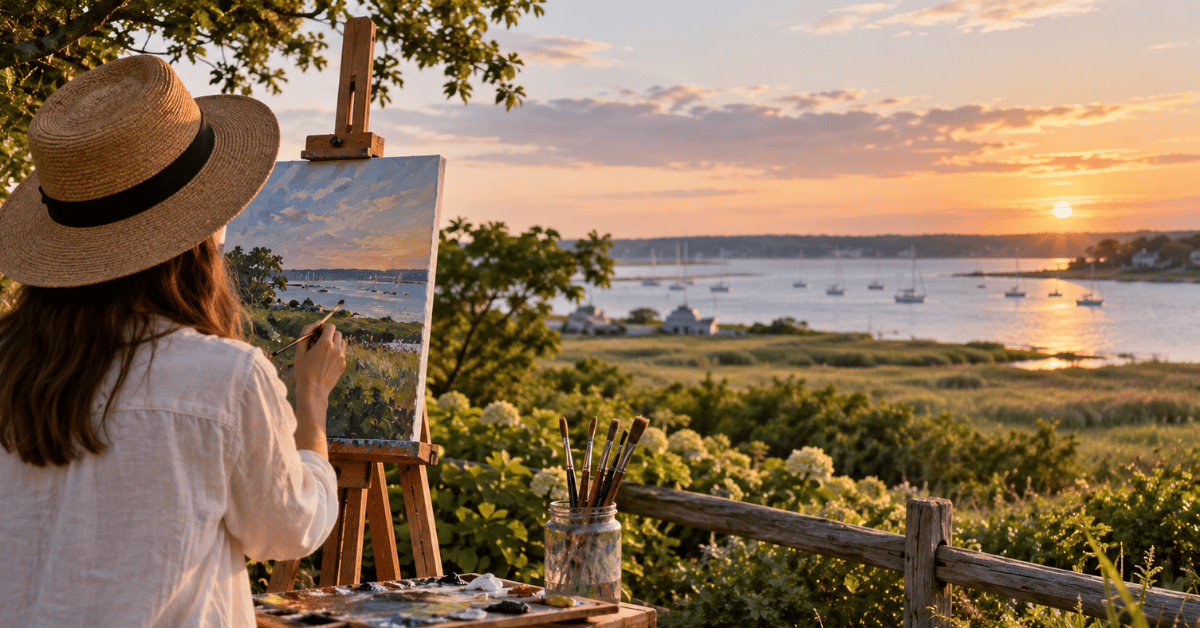
That legacy continues today through museums, historic artist homes, galleries, public programs, performances, learning opportunities, and cultural centers such as Guild Hall in East Hampton.
Understanding how the Hamptons became an art destination helps visitors see the region differently. The beaches, villages, studios, stages, galleries, and gathering places are part of a deeper cultural story.
Hamptons Art History and the Rise of the East End as a Creative Place
The Hamptons did not become an art destination overnight.
Its artistic identity developed through a combination of natural beauty, seasonal life, proximity to New York City, historic village culture, patronage, and the presence of artists who chose to live and work on the East End.
For some artists, the appeal was the landscape. For others, it was the quiet, the light, the distance from the city, or the chance to join a community of other creative people.
The East End offered something that many artists needed: space.
Space to work.
Space to think.
Space to return to.
Space to experiment away from the speed of urban life.
That combination helped the region become a place where art was not only shown, but made.
Why the East End Became Attractive to Artists
Several qualities helped shape the East End’s artistic reputation.
The region offered coastal light, open skies, fields, farms, beaches, marshes, village streets, and wooded roads. It also offered a seasonal rhythm that changed the atmosphere throughout the year.
Artists could find both inspiration and distance.
The East End was close enough to New York City to remain connected to major cultural networks, but far enough away to feel like a retreat. That balance made it appealing to artists who wanted access to the art world without being fully absorbed by it.
This relationship between place and creative work is explored more deeply in Guild Hall’s articles on coastal light and artistic inspiration in the Hamptons and how the Atlantic landscape influenced artists of the East End.
This article takes a broader historical view: how those qualities helped turn the East End into a lasting cultural destination.
Early Artistic Roots in East Hampton
East Hampton’s artistic identity has deep roots.
In the late nineteenth century, artists began to see the East End as more than a picturesque subject. It became a place to work. The village and its surrounding landscapes offered material for painters interested in light, sea, sky, and rural life.
Thomas Moran is often associated with this early chapter. His home and studio in East Hampton helped mark the village as an emerging artists’ colony, and the presence of artist studios helped establish the idea that East Hampton could be a serious creative place.
That idea continued to grow over time.
The East End attracted artists not simply because it was beautiful, but because it allowed creative lives to take shape. Studios, friendships, exhibitions, and local institutions helped turn individual artistic activity into a larger cultural ecosystem.
Visitors interested in East Hampton’s wider museum and cultural landscape can also read Guild Hall’s guide to museums in East Hampton NY.
Guild Hall’s Role in Preserving Hamptons Art History
Guild Hall has played an essential role in the artistic legacy of East Hampton.
Founded in 1931, Guild Hall brought together a museum, theater, and educational mission under one roof. That combination mattered because it reflected a broad understanding of culture. Visual art, performance, learning, and public gathering were not treated as separate worlds. They were part of one shared civic and creative life.
This multidisciplinary model helped strengthen East Hampton’s role as a cultural destination.
A visitor could experience exhibitions, performances, talks, classes, community programs, and special events through one institution. Artists could find visibility. Audiences could encounter new work. Families and residents could participate in the cultural life of the village.
Today, Guild Hall continues that role through current and upcoming exhibitions, Performing Arts, learning programs, and upcoming programs and events.
For a broader look at Guild Hall’s role in the region, readers can also explore Cultural Center in The Hamptons.
From Artist Studios to Cultural Institutions
A strong art destination needs more than individual artists.
It also needs places where art can be shared, discussed, preserved, and experienced by the public. Over time, the East End developed a network of studios, museums, galleries, performance spaces, artist homes, educational programs, and community events.
That infrastructure helped transform the Hamptons from a place where artists worked into a place where audiences came to experience art.
This distinction is important.
A creative region is not built only through production. It is also built through access. Visitors, residents, students, collectors, families, and cultural workers all help sustain the artistic life of a place.
Guild Hall’s article on why cultural organizations matter for the future of the arts explores this idea in more detail.
The Hamptons and Modern American Art
The East End became especially important in the story of modern American art.
In the twentieth century, artists associated with major movements, including Abstract Expressionism, spent time or made homes on Long Island’s East End. The presence of artists such as Jackson Pollock and Lee Krasner helped connect the region to a larger history of American modernism.
The Pollock-Krasner House and Study Center in Springs remains one of the clearest examples of this connection. It preserves the home and studio environment associated with Pollock and Krasner and helps visitors understand how place, process, and artistic innovation came together on the East End.
This history matters because it shows that the Hamptons were not only a scenic escape. They became a working environment for artists who helped shape American art.
Readers interested in women artists connected to the region can also visit Guild Hall’s article on women artists connected to the Hamptons art scene.
Beyond Famous Artists: A Living Creative Community
Hamptons art history is often told through famous names, but the region’s legacy is much broader.
An art destination is sustained by many people: emerging artists, educators, curators, performers, students, patrons, writers, technicians, volunteers, audiences, and community members.
This wider network helps culture remain active.
Guild Hall’s article on emerging artists in The Hamptons offers a useful reminder that artistic legacy is not only about the past. It is also about who is being supported now.
The East End continues to attract new generations of artists because it offers history, visibility, inspiration, and community. Its cultural identity is not frozen in one period. It keeps developing through exhibitions, performances, residencies, talks, classes, and public events.
That continuity is part of what makes the Hamptons an art destination rather than simply a historic art region.
How Museums Preserve and Expand Hamptons Art History
Museums help turn artistic activity into public memory.
They preserve artworks, organize exhibitions, support artists, create educational programs, and give audiences ways to understand creative work in context.
In the Hamptons, museums and cultural institutions help visitors connect local history with broader artistic movements. They make it possible to see how individual works relate to place, community, technique, identity, and time.
Guild Hall’s permanent collection is an important resource for understanding the East End’s artistic legacy. Through collection care, exhibitions, and public interpretation, museums help ensure that the region’s art history remains accessible to new audiences.
Readers who want to understand the museum experience more deeply can also explore Guild Hall’s articles on how art exhibitions are curated inside museums and what makes a memorable museum exhibition experience.
How the East End Became More Than a Summer Escape
The Hamptons are often associated with summer, but their artistic legacy is not limited to one season.
Artists have long been drawn to the East End for reasons that go beyond leisure. The region offers solitude, atmosphere, studio life, community, and cultural continuity.
For visitors, this means the Hamptons can be experienced in more than one way.
A trip to the East End may include beaches and restaurants, but it can also include exhibitions, performances, historic artist sites, lectures, workshops, and museum visits. Cultural experiences help reveal the region’s depth beyond its seasonal reputation.
Guild Hall’s cultural travel guide to the Hamptons for first-time visitors is a useful companion for those planning a broader visit, while this article focuses specifically on the artistic legacy that helped define the East End as an art destination.
The Role of Performance in the Hamptons’ Cultural Identity
The artistic legacy of the Hamptons is not only visual.
Performance has also shaped the cultural life of the East End. Theater, music, dance, comedy, public talks, and staged events have helped Guild Hall and other cultural spaces bring audiences together around live experiences.
This matters because an art destination is not only a place to look. It is also a place to listen, gather, respond, and participate.
Guild Hall’s theater and performance programming helps extend the region’s creative identity beyond galleries and studios. Visitors can experience the East End through live performance as well as visual art.
Related Guild Hall articles on live theater on Long Island’s East End, Dance in The Hamptons, and Public Talks in The Hamptons explore these parts of the cultural landscape in greater detail.
Education, Community, and the Future of the Artistic Legacy
A lasting art destination must also invest in future generations.
Education, family programs, teen programs, workshops, and community events help ensure that the arts remain part of everyday life. They give young people and new audiences a way to participate in the region’s cultural legacy, not only observe it from a distance.
Guild Hall’s learning programs connect visitors and local communities with creative opportunities across ages and interests.
Readers interested in this educational dimension can explore Guild Hall’s articles on family art activities in the Hamptons and teen arts programs in East Hampton.
These programs help make art history feel alive. They show that the East End’s creative legacy is not only something preserved in collections or remembered through famous artists. It is something people continue to learn from, contribute to, and carry forward.
Planning a Visit Around Hamptons Art History
Visitors who want to experience Hamptons art history can begin in East Hampton, where Guild Hall offers a central cultural starting point.
Guild Hall is located at:
A visit may include exhibitions, performances, learning programs, public talks, or time spent exploring Guild Hall’s collection resources.
Visitors can also connect a Guild Hall visit with nearby historic and cultural sites that reflect East Hampton’s broader artistic heritage.
Experience the Artistic Legacy of the Hamptons at Guild Hall
The artistic legacy of the Hamptons continues because the East End remains a place where art is made, shown, discussed, taught, and experienced.
From early artist studios to modern and contemporary art, from museum exhibitions to live performance, from established figures to emerging voices, the region’s cultural identity has been shaped by generations of creative activity.
Guild Hall remains one of the central places where that ongoing story can be experienced in East Hampton.
Explore current and upcoming exhibitions, discover Performing Arts at Guild Hall, review upcoming programs and events, or plan your visit to Guild Hall to experience the artistic legacy of the Hamptons today.
For broader context on the role of arts participation in community life, the National Endowment for the Arts provides research and resources on how the arts connect people, places, and public culture.