

The relationship between East End landscape artists and the Atlantic coast is one of the defining parts of the region’s creative identity. For generations, artists have been drawn to the East End for its light, open skies, ocean air, shoreline, fields, wetlands, and changing seasons.
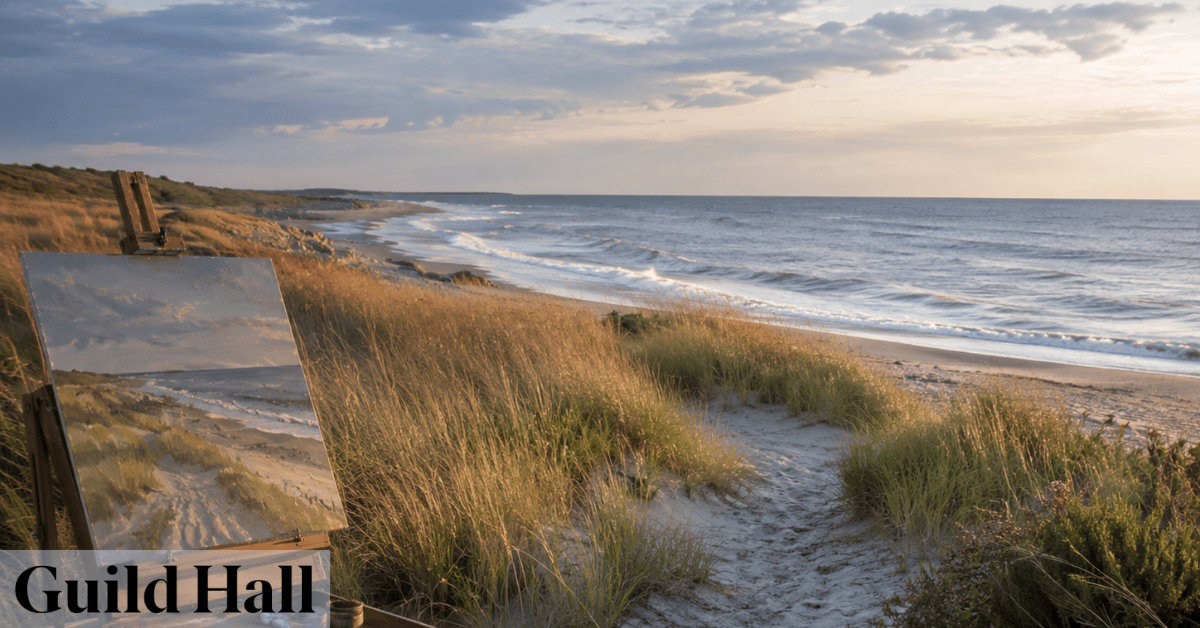
The landscape does more than provide subject matter. It shapes mood, color, movement, memory, and atmosphere. A beach, a field, a tree line, or a wide horizon can become a painting, sculpture, photograph, performance, or abstract idea.
At Guild Hall in East Hampton, visitors can experience this connection through exhibitions, public programs, learning opportunities, and a permanent collection tied to the creative life of the East End.
Understanding how the Atlantic landscape has influenced artists can help visitors look more closely at the art connected to this region.
How the East End Landscape Became a Source of Artistic Inspiration
The East End offers a landscape that feels both quiet and dramatic.
There are ocean beaches, bays, dunes, marshes, gardens, village streets, wooded roads, and open fields. The area changes constantly depending on the season, weather, time of day, and quality of light.
For artists, these changes can become a source of creative attention.
Some artists respond directly to the visible landscape. They may paint the coastline, photograph trees, sketch a horizon, or study the way light falls across water. Others respond less literally. They may translate the feeling of the landscape into color, shape, texture, movement, or abstraction.
This is why the East End has remained meaningful to artists across generations. The landscape offers both a real place and an emotional atmosphere.
Visitors interested in the broader regional context can also explore Guild Hall’s article on visual arts in the Hamptons.
Why Light Matters to East End Landscape Artists
Light is one of the most important qualities of the East End.
The Atlantic coast creates a particular kind of brightness. Light reflects off the ocean, shifts across dunes, moves through trees, and changes quickly with clouds, fog, storms, and sunset.
For artists, this light can affect everything.
It can change color. It can soften a scene. It can create contrast. It can make a familiar place feel new from one hour to the next.
A painter may notice how morning light changes the temperature of a color. A photographer may wait for a certain shadow. A sculptor may think about how natural light moves across a surface. An abstract artist may use color and form to suggest the feeling of coastal atmosphere without showing a literal view.
When looking at art connected to the East End, visitors can ask:
- Does the work feel bright, muted, hazy, or atmospheric?
- Does light seem to shape the mood of the piece?
- Are colors naturalistic, exaggerated, or abstracted?
- Does the artwork suggest a specific time of day?
- Does the surface seem to hold or reflect light?
These questions can make landscape-inspired art feel more alive.
The Atlantic Coast, Memory, and Creative Practice
The Atlantic landscape is not only visual. It is also connected to memory.
For some artists, the East End may be tied to childhood, family, solitude, seasonal return, creative retreat, or personal transformation. For others, the coast may represent movement, change, distance, or uncertainty.
The ocean itself can carry many meanings. It can feel peaceful, powerful, repetitive, unstable, or mysterious. A shoreline can suggest arrival and departure. A horizon can suggest openness, longing, or possibility.
Artists often use landscape to explore these emotional ideas.
A painting of water may not only be about water. A field may not only be a field. A line of trees, a weathered surface, or a coastal color palette may carry memories, questions, or personal associations.
This is one reason landscape remains important even in contemporary art. Artists do not need to reproduce what they see exactly. They can use the landscape as a starting point for feeling, memory, and interpretation.
How Artists Translate Landscape Into Color, Form, and Texture
Artists respond to landscape in many different ways.
Some use recognizable imagery. Others break the landscape into color, gesture, rhythm, or material.
A coastline might become a horizontal line. A dune might become a soft curve. Ocean light might become a pale wash of color. Rocks, grasses, sand, and weathered wood might inspire texture or surface.
In this way, landscape can move from representation into abstraction.
Visitors may not always see a beach, field, or sky directly in the artwork. But they may still feel the influence of place.
When viewing landscape-inspired work, look for:
- broad horizontal compositions;
- layered surfaces;
- natural color palettes;
- weathered textures;
- repeated organic shapes;
- contrasts between openness and density;
- marks that suggest movement, wind, water, or time.
Guild Hall’s current and upcoming exhibitions offer visitors opportunities to experience how artists use material, form, and image to explore ideas connected to place and perception.
Beyond Seascapes: Landscape as Feeling, Memory, and Abstraction
Landscape art is sometimes misunderstood as simply a view of nature.
But for many artists, landscape is not only something to look at. It is something to interpret.
A seascape may describe a place, but it may also express solitude. A field may suggest memory. A sky may become a study of color. A coastline may become a metaphor for change.
This is especially important when thinking about the East End.
The region’s artistic influence is not limited to literal paintings of beaches or gardens. Its landscape can appear in abstract compositions, sculptural forms, photographic studies, performance ideas, and material choices.
A work may not show the Atlantic Ocean directly, yet still carry the feeling of coastal light or open space.
For visitors, this opens a more generous way of looking. Instead of asking only “What place does this show?” you might ask, “What kind of place does this feel like?”
That question can reveal connections between landscape and emotion.
How Guild Hall Connects Visitors With East End Artistic Inspiration
Guild Hall gives visitors a meaningful place to explore the relationship between art and the East End.
Through exhibitions, public programs, learning opportunities, and collection resources, Guild Hall connects audiences with artists, ideas, and creative practices shaped by the region.
A visit can help people understand how the East End’s landscape, history, and cultural community continue to influence artistic work.
Visitors can also explore Guild Hall’s permanent collection to learn more about artists connected to the creative history of the East End.
This connection matters because art is not made in isolation. It is shaped by studios, conversations, institutions, audiences, materials, and place.
Guild Hall brings many of those elements together in East Hampton.
What to Notice When Viewing Landscape-Inspired Art
When viewing art influenced by landscape, it helps to slow down.
Rather than looking only for recognizable scenery, pay attention to the deeper qualities of the work.
Ask yourself:
- What kind of atmosphere does this artwork create?
- Does it feel coastal, open, dense, quiet, bright, or stormy?
- How does the artist use color?
- Are the shapes organic, geometric, loose, or structured?
- Does the surface suggest weather, movement, erosion, or time?
- Does the work feel connected to a real place or an imagined one?
These questions can help visitors experience landscape-inspired art more deeply.
Guild Hall’s guide on how to visit an art museum offers additional ways to slow down, look closely, and respond to artworks with more attention.
How Public Programs Deepen the Connection Between Art and Place
Public programs can help visitors understand how artists think about place.
An artist talk, curator conversation, exhibition walkthrough, or workshop may reveal how landscape influenced a particular work or body of work. A speaker might discuss the role of light, memory, weather, materials, or the East End’s creative community.
These programs can make the experience more personal.
Instead of seeing the finished artwork only, visitors may hear about the process behind it. They may learn how an artist returned to a place repeatedly, responded to a season, or translated an outdoor experience into a studio practice.
Guild Hall’s upcoming programs and events can help visitors connect exhibitions with talks, performances, learning programs, and community conversations.
This gives the landscape another layer of meaning. It becomes part of a living cultural exchange.
Nature, Creativity, and the East End Imagination
The East End landscape continues to inspire because it leaves room for attention.
The ocean, fields, skies, and changing light invite people to look longer. They also remind artists that place is never fixed. It shifts with weather, season, memory, and perspective.
That sense of change is central to creative practice.
An artist may return to the same view many times and see something different each day. A material may respond to humidity, light, or time. A color may feel different in summer than in winter. A memory of the landscape may become more abstract over the years.
This is why nature-inspired art can feel both local and universal.
It may begin in a specific place, but it can speak to broader experiences of time, memory, beauty, loss, and renewal.
For wider context on landscape in American art, visitors can explore resources from the Smithsonian American Art Museum, which holds major collections connected to American artistic traditions and changing interpretations of place.
Planning a Visit to Guild Hall From the East End Landscape
A visit to Guild Hall can be part of a wider experience of the East End’s landscape and cultural life.
Visitors may spend time near the coast, notice the light and atmosphere of the region, and then see how artists respond to similar qualities through exhibitions, programs, and collection works.
Guild Hall is located at:
Visitors planning a route from a coastal East Hampton setting can use Maidstone Park Beach as a starting point before heading to Guild Hall.
Directions From Maidstone Park Beach to Guild Hall
This route connects one of East Hampton’s coastal landscapes with Guild Hall’s museum, exhibition, performance, and public program spaces on Main Street.
Review the official details before you plan your visit to Guild Hall.
Explore East End Landscape Inspiration at Guild Hall
The Atlantic landscape has helped shape the artistic identity of the East End for generations.
Its light, coast, fields, weather, and atmosphere continue to influence artists who work through painting, sculpture, photography, abstraction, performance, and mixed media.
At Guild Hall, visitors can experience how art and place come together through exhibitions, collection resources, public programs, and learning opportunities.
Explore current and upcoming exhibitions, discover learning programs, review upcoming programs and events, or plan your visit to Guild Hall in East Hampton.