

Knowing what to expect at an artist talk can make the experience feel more approachable, especially for visitors who are new to museum programs, exhibition walkthroughs, or cultural conversations.
An artist talk is not a lecture that requires expert knowledge. It is a chance to hear directly from an artist, curator, writer, performer, or cultural voice about ideas, process, materials, influences, and the stories behind creative work.
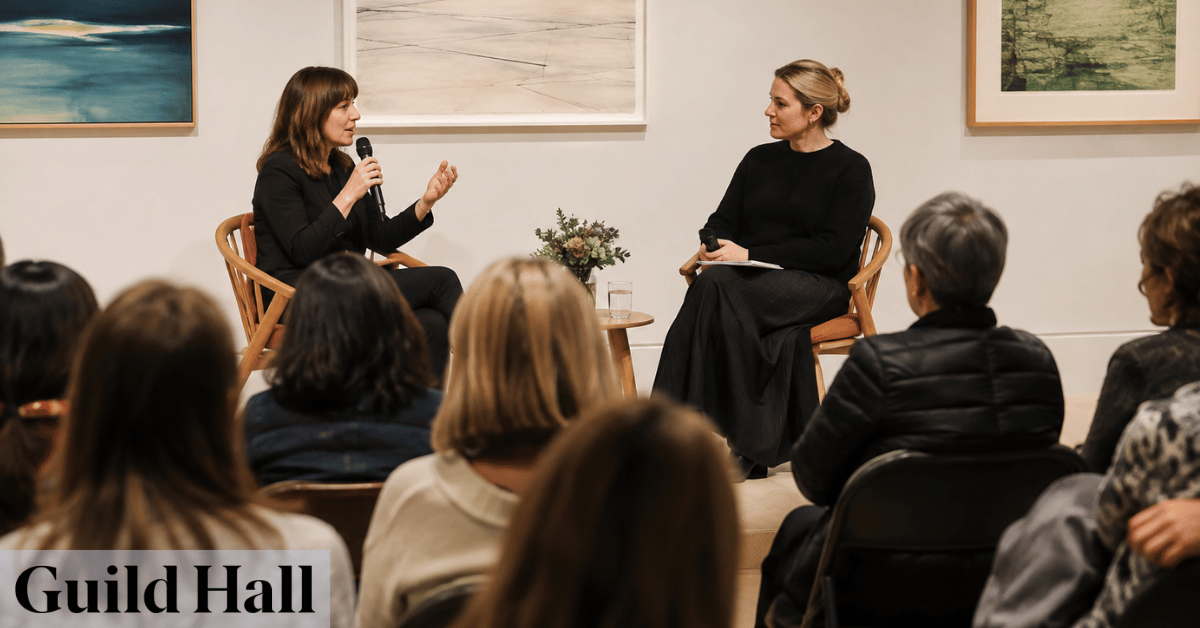
At Guild Hall in East Hampton, artist talks and public programs are part of a wider cultural experience that includes museum exhibitions, performances, learning opportunities, community events, and conversations connected to the creative life of the East End.
For visitors, these programs can make an exhibition feel more personal. They offer context that may not appear on a wall label and create space for audiences to listen, reflect, and ask questions.
What Is an Artist Talk?
An artist talk is a public conversation where an artist discusses their work, process, ideas, influences, or current exhibition.
Some artist talks are informal and conversational. Others may include a moderator, curator, critic, writer, or fellow artist. The format can vary, but the goal is usually the same: to help audiences understand the work from a more personal and thoughtful perspective.
An artist talk may explore:
- how a body of work developed;
- why certain materials were chosen;
- what themes or questions shaped the work;
- how the artist thinks about process;
- how a specific exhibition came together;
- what role place, memory, history, or community plays in the work.
For many visitors, hearing an artist speak can change the way they see the exhibition. A detail that seemed small may become important. A material choice may feel more intentional. A visual theme may become easier to recognize.
Artist talks remind audiences that artworks are not only finished objects. They are the result of choices, experiments, questions, and lived experience.
What to Expect at an Artist Talk as a First-Time Visitor
First-time visitors sometimes worry that they need to know art history before attending an artist talk. They do not.
Most artist talks are designed for a range of audiences. Some people may be artists, collectors, students, or museum members. Others may simply be curious visitors who want to learn more.
You can expect a welcoming environment where the speaker shares context about their work. Depending on the program, the talk may include images, discussion, audience questions, or a connection to an exhibition currently on view.
You may hear about the artist’s background, creative process, studio practice, materials, challenges, influences, or the ideas behind a specific work.
You do not need to understand everything. It is enough to listen for one idea, one detail, or one moment that helps you see the work differently.
Visitors can review Guild Hall’s upcoming programs and events to see when artist talks, public conversations, exhibition programs, and related cultural events are scheduled.
Why Artist Talks Make Museum Exhibitions More Meaningful
An exhibition can be meaningful on its own, but an artist talk can add another layer.
When visitors hear from an artist, they often begin to notice things they missed in the gallery. A color choice may connect to memory. A repeated shape may come from a personal symbol. A material may carry emotional, historical, or cultural significance.
Artist talks can also reveal uncertainty. Many artists speak about trial and error, changes in direction, failed attempts, and moments of discovery. This helps audiences understand art as a process rather than a fixed result.
That process can make the exhibition feel more human.
A visitor may leave with a deeper understanding of how the work was made, why it matters, and how it connects to larger questions.
Before or after attending a talk, visitors can explore Guild Hall’s current and upcoming exhibitions to connect the conversation with what is on view.
How Artist Talks Connect Art, Process, and Personal Story
One of the most valuable parts of an artist talk is hearing how creative work develops over time.
Artists may speak about childhood memories, landscapes, family history, political questions, materials, music, literature, movement, architecture, or other artists who influenced them. These stories help audiences understand that artworks rarely appear in isolation.
A painting, sculpture, photograph, performance, or installation may begin with a personal experience. It may also grow through research, experimentation, collaboration, or repeated studio practice.
Listening to these stories can help visitors see art as something active.
The finished work is only one part of the journey. The artist talk opens a window into the decisions, doubts, and discoveries that led to it.
For visitors who want to look more closely before attending a conversation, Guild Hall’s guide on how to visit an art museum offers helpful ways to slow down and engage with exhibitions more deeply.
Questions You Can Ask During an Artist Talk
Many artist talks include time for audience questions.
You do not need to ask something complex. A clear, curious question is often the most meaningful.
Good questions might include:
- What inspired this body of work?
- How did you choose these materials?
- Did the exhibition change as it was being installed?
- Is there a work in the show that feels especially important to you?
- How has your process changed over time?
- What do you hope visitors notice?
- How does place influence your work?
- Are there artists, writers, or experiences that shaped this project?
If you feel nervous about asking a question, listen to the conversation and write down something you want to think about later.
Audience questions can often reveal new parts of the work. They may also show that other visitors are wondering about similar things.
How to Prepare Before Attending an Artist Talk
Preparing for an artist talk does not need to take much time.
A few simple steps can make the experience richer:
- look at the event description;
- learn the artist’s name and exhibition title;
- visit the exhibition beforehand if possible;
- read the introductory wall text;
- choose one or two works that interest you;
- write down a question or observation;
- arrive early enough to settle in.
If the talk is connected to an exhibition, seeing the work first can make the conversation more meaningful. You may recognize specific artworks, materials, or themes when the speaker discusses them.
If you cannot see the exhibition beforehand, that is also fine. The talk may give you a useful starting point before visiting the galleries afterward.
Guild Hall’s visitor information can help audiences plan arrival, accessibility, transportation, and other practical details before attending a program.
Artist Talks, Curator Conversations, and Exhibition Walkthroughs
Artist talks are part of a larger family of cultural conversations.
A curator conversation may focus more on how an exhibition was organized, why certain works were selected, or how the show connects to a broader artistic context.
An exhibition walkthrough may take place inside the gallery, allowing visitors to move through the space while hearing directly from an artist, curator, or educator.
A public conversation may bring together artists, writers, scholars, performers, civic leaders, or cultural figures to discuss a wider topic.
Each format offers a different way to engage.
An artist talk may feel personal. A curator conversation may provide structure. A walkthrough may help visitors connect words directly to the works on view. A public conversation may connect art to larger questions about culture, history, community, or public life.
Visitors interested in this broader format can also explore Guild Hall’s article on Public Talks in The Hamptons.
Why Artist Talks Are Valuable for Students and Emerging Artists
Artist talks can be especially helpful for students, young artists, and anyone developing a creative practice.
Hearing an artist speak about process can make creativity feel more accessible. It shows that finished work often comes from experimentation, revision, research, and persistence.
Students may learn how artists build a body of work, respond to criticism, choose materials, prepare for exhibitions, or stay connected to a creative community.
Emerging artists may also find encouragement in hearing that uncertainty is part of the process.
At Guild Hall, learning programs help connect audiences of different ages with creative experiences, workshops, and educational opportunities. Artist talks can support that learning by showing how ideas become practice.
What to Notice During an Artist Talk at Guild Hall
When attending an artist talk at Guild Hall, listen for connections between the conversation and the wider cultural setting.
You might notice how the artist speaks about place, material, memory, collaboration, history, or audience. You might also hear references to the East End, the studio process, or the relationship between art and community.
Instead of trying to remember every detail, focus on a few moments:
- one idea that changed how you saw the work;
- one material or process detail;
- one personal story;
- one question from the audience;
- one artwork you want to revisit;
- one phrase that stayed with you.
After the talk, return to the exhibition if possible. Looking again after hearing the artist speak can make the work feel different.
A successful artist talk does not explain everything. It gives visitors new ways to keep looking.
How Artist Talks Build a Stronger Connection With the Arts
Artist talks can make museums feel more open.
They turn the experience from silent observation into shared conversation. Visitors hear from the people behind the work, ask questions, and connect with other audience members who are also looking, listening, and learning.
This matters because art is not only something displayed on walls or stages. It is part of a living exchange between artists, institutions, audiences, and communities.
A talk can make that exchange visible.
It can help visitors feel more confident entering exhibitions, more curious about artistic process, and more connected to the cultural life around them.
Guild Hall’s year-round programming supports that connection through exhibitions, performances, education, and public events.
How to Plan Your Visit to Guild Hall for an Artist Talk
Guild Hall is located at:
Its central location in East Hampton Village makes it a practical destination for artist talks, museum exhibitions, public programs, and cultural events.
Before attending, review the event time, ticket or registration details, accessibility information, parking, transportation, and related exhibitions.
Visitors planning a route through East Hampton can use a nearby local landmark as a starting point before heading to Guild Hall.
This short local route connects an East Hampton civic landmark with Guild Hall’s museum, exhibition, performance, and public program spaces on Main Street.
Review the official details before you plan your visit to Guild Hall.
Explore Artist Talks and Cultural Programs at Guild Hall
Learning what to expect at an artist talk can make the experience feel more welcoming and rewarding.
You do not need to be an art expert to attend. You only need curiosity, attention, and a willingness to listen.
At Guild Hall, artist talks and cultural conversations help visitors connect with exhibitions, creative process, public ideas, and the artistic life of East Hampton.
Explore upcoming programs and events, view current and upcoming exhibitions, discover learning programs, or plan your visit to Guild Hall.
The museum field is also supported by organizations such as the American Alliance of Museums, which promotes museums as places for education, public engagement, and community connection.