

Understanding what makes a great museum exhibition can change the way you experience art. A memorable exhibition is not only about the individual artworks on view. It is also about the story they tell together, the way they are arranged, the atmosphere of the galleries, and the questions visitors carry with them after leaving.
A great exhibition invites people to slow down. It helps them notice relationships between works, understand an artist’s ideas, and connect visual experience with memory, place, history, or contemporary life.
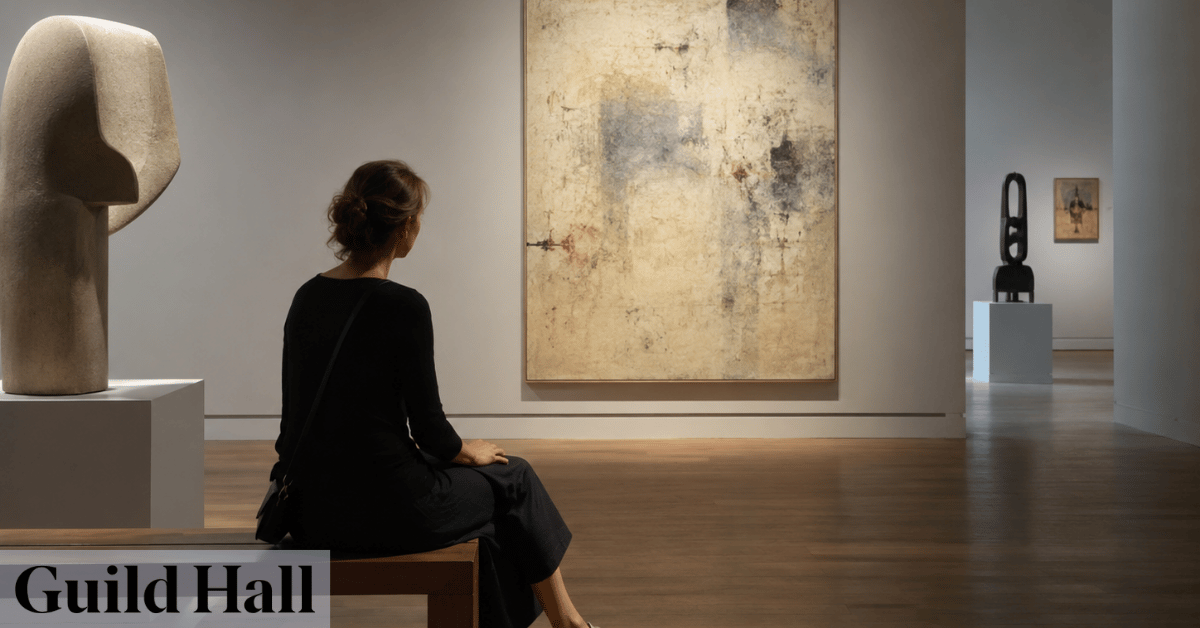
At Guild Hall in East Hampton, exhibitions are part of a wider cultural experience that includes performances, learning programs, public conversations, community events, and a long connection to the creative life of the East End.
Whether you are a frequent museum visitor or someone just beginning to explore art exhibitions, learning what to look for can make each visit more meaningful.
What Makes a Great Museum Exhibition?
A great museum exhibition gives visitors more than a room full of artworks. It creates a clear and engaging experience.
The works may be beautiful, challenging, quiet, bold, historical, contemporary, personal, or experimental. But what makes the exhibition memorable is how those works come together.
A strong exhibition often has:
- a clear central idea;
- a thoughtful selection of artworks;
- a sense of rhythm from one space to another;
- helpful interpretive text;
- careful attention to lighting and layout;
- a connection between artwork, audience, and place.
Visitors do not need to understand every curatorial decision to appreciate an exhibition. Sometimes, the most important thing is to notice how the show feels as a whole.
Does it invite curiosity?
Does it help you see an artist differently?
Does it make you want to return to a specific work?
Does it leave you with a question?
Those responses are part of what makes a museum exhibition successful.
How Curators Shape the Story of a Museum Exhibition
Curators help shape the way visitors encounter art.
They select works, organize them, develop themes, write or guide interpretive materials, and think carefully about the visitor’s journey through the space. Their choices affect how people understand the exhibition.
A curator might organize a show chronologically, allowing visitors to follow an artist’s development over time. Another exhibition might be arranged by theme, material, color, subject, or emotional tone.
As you move through a museum exhibition, pay attention to the order of the works.
Ask yourself:
- Why might this artwork appear first?
- What changes as I move through the exhibition?
- Do certain works seem to speak to each other?
- Is the exhibition building toward a particular idea or feeling?
- Does the final room change how I understand the first one?
At Guild Hall, visitors can explore current and upcoming exhibitions to see how different artists, materials, and ideas are presented across the museum program.
Why the Selection of Artworks Matters in an Exhibition
The selection of artworks can shape the entire experience.
A great exhibition does not need to include every work an artist has made. In many cases, a focused selection can be more powerful than a large survey.
Curators may choose works that reveal a turning point in an artist’s practice, highlight a specific theme, or show how ideas developed across time. They may also bring together works that create contrast.
One artwork may feel intimate. Another may feel monumental. One piece may be quiet and restrained, while another may be expressive and intense. Together, those differences help visitors understand the range of an artist’s work.
When visiting an exhibition, consider what may have been included and what may have been left out.
This does not require expert knowledge. It simply means asking how each artwork contributes to the larger experience.
A thoughtful selection allows visitors to see patterns, changes, risks, and connections that may not be obvious when looking at a single work in isolation.
How Exhibition Design Changes the Visitor Experience
Exhibition design affects how visitors feel inside a museum.
The spacing between artworks, the color of the walls, the height of installation, the direction of movement, and the use of open or intimate rooms all influence the experience.
A painting installed alone on a wall can feel contemplative. A group of works placed close together may create intensity or energy. A sculpture in the center of a gallery can change how people move through the room.
Good exhibition design does not call attention to itself unnecessarily. It supports the artwork and helps visitors engage with it.
As you walk through a show, notice how your body responds.
Do you move slowly or quickly?
Do you pause in certain places?
Does one room feel open while another feels more intimate?
Does the layout encourage conversation, quiet reflection, or close looking?
These details are part of the exhibition, even if they are not always mentioned in the wall text.
Visitors who want to approach exhibitions more thoughtfully can also read Guild Hall’s guide on how to visit an art museum.
The Role of Labels, Wall Texts, and Interpretation
Labels and wall texts help visitors understand what they are seeing, but they should not replace the experience of looking.
A good label gives useful information without overwhelming the viewer. It may identify the artist, title, date, materials, and context. It may also explain a concept, point out a detail, or connect the artwork to the larger exhibition.
Introductory wall text can be especially helpful. It gives visitors a framework for the exhibition before they begin moving through the galleries.
Still, the most meaningful visits often balance reading with direct observation.
Try looking first, then reading.
Form your own response before turning to the label. After reading, return to the artwork and see whether your perception changes.
A strong exhibition allows space for both personal interpretation and curatorial guidance. The text should open the experience, not close it.
How Lighting, Space, and Flow Affect an Exhibition
Lighting can change the way an artwork is experienced.
Soft lighting may create intimacy. Bright, even lighting may help viewers see detail clearly. Shadows can affect sculpture, texture, and surface. Natural light, when used carefully, can shape the atmosphere of a gallery.
Space also matters.
Some artworks need distance. Others reward close looking. Large-scale works may require room for the viewer to step back, while small works can invite a slower and more intimate encounter.
Flow is another important part of exhibition design. Visitors should be able to move through the space in a way that feels natural. A good exhibition gives people room to pause, return, and look again.
During your next museum visit, notice how lighting and space influence your attention.
You may find that the atmosphere of the room changes how you understand the work.
Why Materials and Installation Choices Matter
Artworks are not only images or objects. They are also made from materials.
Paint, canvas, wood, bronze, clay, fabric, paper, leather, glass, video, sound, found objects, and digital media all carry different meanings and associations.
A great exhibition helps visitors notice those choices.
Materials can suggest history, labor, memory, fragility, permanence, repair, or transformation. A work made from salvaged objects may communicate differently than one made from traditional materials. A textured surface may reveal the physical movement of the artist’s hand.
Installation choices also matter.
A sculpture placed on a pedestal feels different from one installed directly on the floor. A video shown in a darkened space creates a different experience than a painting in a bright gallery. A series of works arranged in a line can suggest sequence, while a more open layout may invite comparison.
When visitors pay attention to materials and installation, they begin to see the exhibition as a constructed experience rather than a simple display.
How Public Programs Can Deepen a Museum Exhibition
Some exhibitions continue beyond the gallery walls.
Artist talks, curator conversations, workshops, performances, lectures, and learning programs can help visitors understand an exhibition from different perspectives.
A public program may reveal how an artist thinks about process. A workshop may help visitors understand a material more directly. A conversation may connect the exhibition to history, community, or contemporary life.
At Guild Hall, exhibitions exist within a broader cultural calendar. Visitors can explore upcoming programs and events to find talks, performances, classes, and community programs that may connect with what is on view.
This connection between exhibitions and public programs helps make the museum experience more active.
Visitors are not only looking at finished works. They are also invited into dialogue with ideas, artists, and the community around them.
What Visitors Can Notice During a Guild Hall Exhibition
A visit to Guild Hall can be approached with curiosity and attention.
Before entering the galleries, take a moment to slow down. Notice the title of the exhibition. Read the introductory text if one is available. Then move through the space without rushing.
As you look, consider:
- Which work do I remember first?
- What material appears most often?
- Is there a recurring color, shape, or subject?
- Does the exhibition feel quiet, energetic, intimate, or expansive?
- How does the arrangement of the works affect my experience?
- What question do I have after leaving the gallery?
Visitors can also explore Guild Hall’s permanent collection to better understand the institution’s connection to artists and the creative history of the East End.
A great exhibition does not need to answer every question. Sometimes, its strength is that it gives visitors something to think about long after the visit ends.
How Museum Exhibitions Connect to Place
Museum exhibitions often feel different depending on where they are experienced.
In East Hampton, art is connected to a long history of artists, writers, performers, collectors, educators, and cultural institutions. The East End’s landscape, light, architecture, and creative community have all shaped the way art is made and experienced in the region.
Guild Hall’s exhibitions are part of that setting.
A visitor may come for a specific artist or show, but the experience is also shaped by the institution’s location in East Hampton Village and its role in the cultural life of the East End.
This connection to place can make an exhibition feel more grounded.
The artworks may speak to personal memory, contemporary ideas, material exploration, or artistic history. At the same time, the visit becomes part of a larger cultural landscape.
Readers interested in that wider context can explore Guild Hall’s article on visual arts in the Hamptons.
What Makes an Exhibition Memorable After You Leave
A memorable exhibition stays with you.
It may be one artwork, one color, one room, one idea, or one feeling. You may remember a material, a story from a label, a conversation with someone, or a question you could not answer.
After leaving a museum exhibition, ask yourself:
- Which artwork do I still see in my mind?
- Did the exhibition change how I think about an artist or subject?
- Was there a moment that surprised me?
- What would I want to see again?
- What did I notice that I might have missed on a faster visit?
These reflections can deepen the experience after the visit ends.
They may also guide what you choose to see next.
A strong exhibition does not simply show art. It changes the way visitors look.
How to Plan Around Location, Timing, and Transportation for a Guild Hall Exhibition
Location can shape the way visitors experience a museum exhibition.
Guild Hall is located in the heart of East Hampton Village, making it a practical cultural stop for residents, seasonal visitors, families, students, and travelers exploring the East End.
Guild Hall is located at:
Before visiting an exhibition, it is helpful to check current hours, admission details, accessibility information, parking, transportation options, and related programs.
Visitors planning a cultural route through East Hampton can use a nearby local landmark as a starting point before heading to Guild Hall.
Explore Museum Exhibitions at Guild Hall in East Hampton
Learning what makes a great museum exhibition can help visitors look beyond individual artworks and notice the larger experience.
Curatorial choices, artwork selection, design, lighting, interpretation, materials, public programs, and connection to place all shape how an exhibition feels.
At Guild Hall, visitors can experience exhibitions within a wider cultural setting that includes performing arts, learning programs, public conversations, community events, and a permanent collection connected to the East End.
Explore current and upcoming exhibitions, discover learning programs, review upcoming programs and events, or plan your visit to Guild Hall in East Hampton.
The museum field is also supported by organizations such as the American Alliance of Museums, which promotes professional standards, public engagement, and the value of museums in community life.