

When an audience watches a theater performance, the actors naturally attract most of the attention. Their voices, movements, and expressions carry the story. Yet another element is constantly influencing how that story is experienced: stage lighting.
A subtle change in brightness can shift the atmosphere of an entire scene. A single spotlight can draw attention to a character, while shadows may suggest uncertainty or emotional tension. Lighting can also help establish the passage of time, distinguish between locations, and support the visual rhythm of a production.
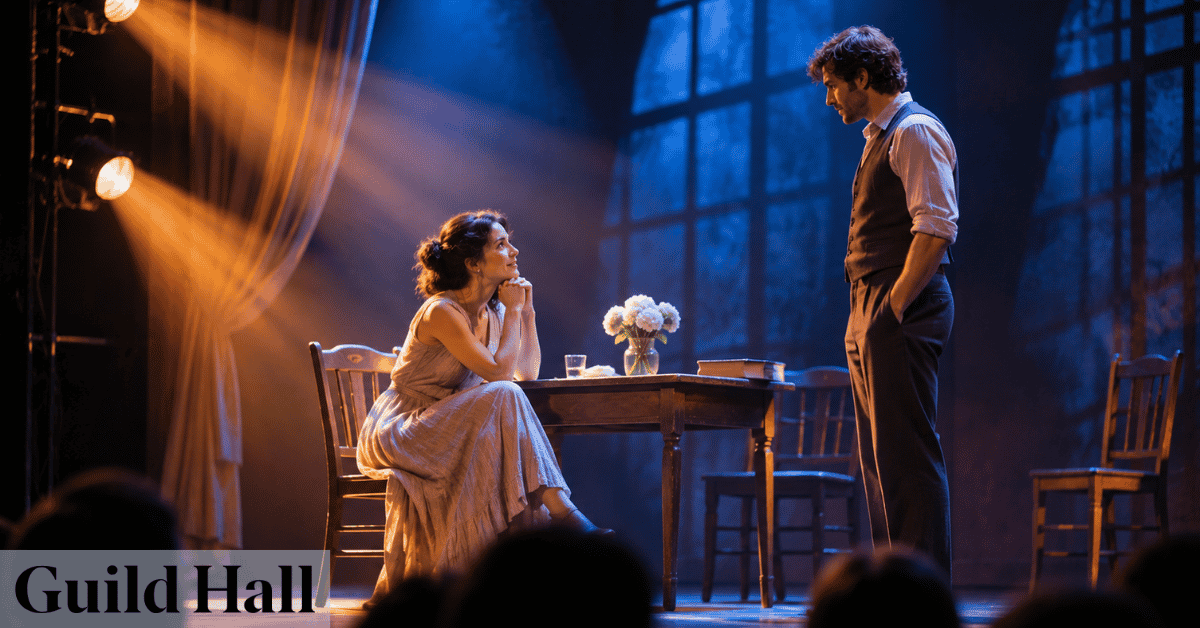
In professional theater, these effects are not simply decorative. They result from creative decisions made by lighting designers in collaboration with directors, performers, and other members of the production team.
At Guild Hall in East Hampton, the Hilarie and Mitchell Morgan Theater provides a setting for theatrical productions and other live performances. Following its renovation and reopening in 2024, the theater incorporates updated technical capabilities that support a range of performing arts presentations.
Understanding the role of theatrical lighting offers another way to appreciate what happens onstage, including the creative work that audiences may not consciously notice during a performance.
What Is Stage Lighting in Theater?
Stage lighting refers to the controlled use of light to illuminate performers, scenery, and performance spaces while supporting the artistic intentions of a production.
Its most immediate function is visibility. Audiences need to see the performers, recognize facial expressions, and follow the action. At the same time, actors and other performers need sufficient visibility to move safely within the performance environment.
A lighting designer considers where illumination should fall, how intense it should be, which colors are appropriate, and how the lighting should change throughout the production. These decisions influence the visual composition of each scene and the audience’s understanding of what is taking place.
For example, a scene set during a sunny afternoon might use broad, relatively even illumination to suggest natural daylight. A private conversation late at night could rely on a smaller pool of light, leaving much of the surrounding space in shadow.
Neither approach is inherently better. The choice depends on the story, the setting, and the emotional effect the creative team wants to achieve.
Stage lighting can also be intentionally unrealistic. Rather than recreating a believable environment, a production might use strong contrasts or unexpected colors to emphasize a character’s emotions or establish a stylized theatrical world.
These artistic possibilities make lighting an essential part of stage design rather than a purely technical requirement.
How Lighting Establishes Mood and Atmosphere
One of the most recognizable functions of theater lighting is its ability to influence the atmosphere of a scene.
Consider two characters sitting together onstage. Under soft, warm illumination, the setting might feel intimate and comfortable. If the lighting changes to a harsher, cooler arrangement, the same conversation could appear tense or emotionally distant.
The dialogue and performers have not necessarily changed, but the visual environment has altered how the scene is perceived.
Lighting designers achieve these effects by combining brightness, color, contrast, and direction. A brightly illuminated stage may create a feeling of openness, while selective areas of darkness can introduce mystery or uncertainty.
The relationship between light and shadow is particularly important. Shadows can conceal parts of a setting, create depth, or isolate a performer from the surrounding environment.
Lighting may also help communicate a change in time or location without requiring a complete scenery change. A gradual shift from warm tones to cooler illumination might suggest the transition from late afternoon to evening. A sudden blackout can mark the end of a scene, while a slow fade may allow the emotional impact of a moment to linger.
These effects are most successful when they complement the performance rather than compete with it.
Audiences do not always notice individual lighting changes, and that can be part of the design’s effectiveness. The lighting supports the atmosphere while allowing the story to remain central.
The Role of Color, Direction, and Intensity in Theater Lighting
Lighting designers work with several interconnected elements to achieve the desired appearance of a scene. Among the most important are color, direction, and intensity.
Color influences both the visual environment and the emotional associations created by a scene. Warm amber tones can suggest sunlight or an intimate interior, while cooler colors may evoke nighttime, distance, or a more stylized atmosphere.
These associations are flexible. Blue light does not automatically mean sadness, and red does not always communicate danger or anger. The meaning depends on the context of the production, the scenery, the costumes, and the other lighting choices.
Direction determines how light reaches performers and objects. Front lighting can make facial expressions easier to see, while side lighting creates shadows that emphasize shape and movement. Backlighting can help separate a performer from the background or produce a silhouette.
The angle matters because the same actor can look noticeably different depending on where the light originates.
Intensity refers to the brightness of the illumination. A designer might use a relatively bright stage to reveal several performers simultaneously, then reduce surrounding light to focus attention on a single character.
The relationship between illuminated and darker areas often matters as much as the absolute brightness.
Designers also consider the texture and focus of light. A sharply defined beam can isolate an area, while softer illumination spreads more gradually across the stage. Patterned light can suggest architectural features, foliage, or other environmental details.
The educational resource What Is Lighting Design? from Theatrecrafts explores these functions and explains how designers use lighting equipment, placement, color, and intensity to shape a theatrical production.
In practice, these elements are rarely considered separately. A particular effect usually depends on several lighting decisions working together.
How Stage Lighting Guides the Audience’s Attention
Theater audiences cannot watch every part of the stage with equal attention. Lighting helps establish a visual hierarchy, directing the eye toward the people or actions that matter at a particular moment.
Imagine a scene involving several performers. Most of the stage may be illuminated evenly during a group conversation. When one character begins an important speech, the lighting might subtly emphasize that person’s position while reducing the prominence of the surrounding area.
This technique, often described as selective focus, is particularly useful in productions with complex staging or simultaneous activity.
A designer may use focused illumination to highlight an object, reveal a character entering the scene, or draw attention to an emotional reaction that might otherwise be overlooked.
By controlling which areas are illuminated, designers can create balance, depth, and contrast. A performer positioned near the edge of a darkened stage may become the visual center of a scene if that person receives the strongest illumination.
These choices are coordinated with the director’s staging. Lighting cannot be designed effectively without considering where performers will stand, how they will move, and which moments require particular emphasis.
For the audience, the result is a more coherent visual experience. Their attention follows the dramatic action without needing to think about the technical decisions guiding it.
How Theater Lighting Designers Work With Directors and Performers
Although lighting is often experienced as part of the finished performance, its development begins much earlier.
Lighting designers typically study the script and discuss the production’s artistic direction with the director. These conversations help establish the intended atmosphere, visual style, and relationship between the lighting and other production elements.
A realistic domestic drama might require illumination that suggests natural light entering a room. An experimental production could call for abstract shapes, strong contrasts, or rapid changes between distinct lighting states.
The designer also works with scenic and costume designers.
Materials and colors respond differently to illumination. A costume that appears one way under neutral light may look quite different under a strongly colored theatrical wash. Scenic surfaces can reflect, absorb, or scatter light, changing how the entire setting appears.
Once the general approach is established, the lighting design is translated into a technical plan. This may include deciding where fixtures will be positioned, how they will be controlled, and which lighting changes are needed throughout the performance.
These changes are commonly organized into lighting cues.
A cue might gradually brighten the stage, isolate a performer, transition between scenes, or create a sudden change at an important dramatic moment.
During technical rehearsals, the lighting team coordinates these cues with the performers’ movements, sound, scenery, and the overall pacing of the production.
Rehearsals can reveal unexpected challenges. A performer might move into an area that needs additional illumination, or a lighting transition may happen too quickly for the emotional tone of a scene.
This collaboration reflects the broader creative process behind live performance, a subject explored in Guild Hall’s article on the role of process in performing arts in the Hamptons.
Stage Lighting in Theater, Dance, and Live Performance
The principles of stage lighting apply across the performing arts, although different disciplines place different demands on designers.
In dramatic theater, lighting frequently supports dialogue, character relationships, and transitions between scenes. The designer must consider the visibility of facial expressions alongside the atmosphere of the setting.
Dance often places greater emphasis on the physical form of the performers.
Side lighting, for example, can accentuate movement by creating highlights and shadows along the body. Lighting changes may also follow the rhythm of the choreography, helping distinguish different sections of a performance.
In musical performances, illumination can contribute to the energy and visual character of the presentation. Some concerts use relatively restrained lighting, keeping the focus on the musicians, while others incorporate dynamic color changes and more elaborate effects.
Staged readings offer another interesting contrast. Because they generally use fewer production elements, lighting may be deliberately simplified to keep attention on the actors and the script.
The appropriate lighting approach depends on the format and the artistic intention rather than on the amount of available equipment.
Guild Hall’s programming reflects this variety of performance styles. Its theater has hosted dramatic presentations, dance, concerts, readings, and other cultural events, each with its own production requirements.
Readers interested in how movement and visual presentation interact can explore Guild Hall’s guide to dance in the Hamptons. Those interested in theatrical formats that place greater emphasis on text and performance can also read What Is a Staged Reading?.
The Technical Side of Performing Arts at Guild Hall
Guild Hall’s Hilarie and Mitchell Morgan Theater has been an important part of East Hampton’s performing arts landscape since the institution opened in 1931.
The theater underwent a significant renovation as part of Guild Hall’s Capital Improvements Project and reopened in July 2024 with upgraded technical capabilities and more comfortable seating.
The improvements were designed to support a range of artistic presentations, including theater, rehearsals, concerts, dance, screenings, and other programs.
The renovated theater provides a flexible environment for different types of performances, from theatrical productions and dance to concerts and staged readings. Each discipline presents its own technical requirements, making adaptable lighting and staging capabilities particularly important for Guild Hall’s diverse programming.
Visitors may not see the preparation that takes place before a performance. Lighting positions, cue sequences, sound coordination, and other technical decisions are developed behind the scenes so that the finished presentation can unfold smoothly.
Understanding these elements offers a deeper appreciation of the work involved in producing live events.
The theater’s renovation is also part of Guild Hall’s wider commitment to maintaining its facilities for artists and audiences. More information is available through the institution’s Capital Improvements Project and its official Hilarie and Mitchell Morgan Theater information.
Planning Your Visit to Guild Hall
Guild Hall is located in East Hampton Village and presents a variety of performing arts events throughout the year.
Visitors interested in experiencing how lighting contributes to theater, dance, and music can explore the institution’s Performing Arts programming and upcoming events calendar.
Individual event listings provide details about performance formats, participating artists, scheduled times, and ticket availability.
Guild Hall is located at:
Before attending a performance, check the event’s start time, ticket details, and any arrival or seating instructions. Guild Hall provides parking behind the building on Pondview Lane, as well as along Main Street and James Lane. For additional information about transportation, accessibility, and visitor policies, consult Guild Hall’s Plan Your Visit page.
Seeing Theater in a Different Light
Stage lighting is one of the elements that connects the technical and artistic sides of theatrical production. Its contribution goes beyond visibility, influencing the atmosphere, composition, and dramatic rhythm of what audiences experience.
A change in illumination can establish a new setting, reveal an emotional shift, or direct attention toward a moment that might otherwise pass unnoticed. These effects emerge through collaboration between lighting designers, directors, performers, and production teams.
The next time you attend a live performance, notice how the lighting changes from one scene to another and how those changes influence your understanding of the action.
At Guild Hall in East Hampton, visitors can encounter a variety of performing arts presentations in the renovated Hilarie and Mitchell Morgan Theater.
Explore upcoming performances, discover Performing Arts at Guild Hall, or plan your visit to experience live theater and performance on Long Island’s East End.