Photo: Louise Kugelberg, 2016

In conjunction with the exhibition, Julian Schnabel: Selected Works from Home, please join us for a conversation between Julian Schnabel and artist Will St. John, discussing Schnabel’s artistic practice, spanning painting, drawing, sculpture, film and more.
This program will take place in the theater; seating is general admission.
Coinciding with the opening of the exhibition, TASCHEN will transform a section of the museum into a fully operational pop-up shop. To celebrate the opening, TASCHEN and Guild Hall will host a book signing of Julian’s new retrospective monograph, Julian Schnabel, following the conversation. For your convenience as a ticket holder, the book can be purchased in advance of Saturday’s talk to be picked up and signed after the program. Click HERE to pre-purchase the book.
Julian Schnabel is one of the most seminal and prolific artists working today. Guild Hall is pleased to present a selection of drawings, paintings, and sculptures from his personal collection. Schnabel is a Guild Hall Academy of the Arts member and an Academy Lifetime Achievement Award recipient. He had a solo exhibition at Guild Hall in 1998 and lives and works in Montauk and New York City.
This exhibition will take place in the newly inaugurated Marks Family Galleries.
This exhibition is organized by Melanie Crader, director of visual arts.
Galleries will be open Thursday to Monday, 12-5 PM through Labor Day, and Friday to Monday, 12-5 PM after 9/2.
Museum admission is always free.
Julian Schnabel
Julian Schnabel was born in New York City in 1951. In 1965, he moved with his family to Brownsville, Texas. He attended the University of Houston from 1969-73, receiving a BFA, and returned to New York to participate in the Whitney Museum Independent Study Program. In 1976-77, Schnabel traveled throughout Europe. He returned in 1978 and while in Barcelona was particularly moved by the architecture of Antoni Gaudí. That same year he made his first plate painting, The Patients and the Doctors.
Schnabel's work defies traditional categorization, culling distinct sources and disparate media engaging in material experimentation, negotiating the physicality of surface, and exploring the relationship between figuration and abstraction, the contradiction between the pictorial and the physical. His practice has always embraced unconventional methods– from employing velvet as his canvas, to layering shattered shards of ceramic onto wooden supports – to explore the physical potentials of the pictorial surface in a non-hierarchical, Whitmanesque manner, drawn from personal narratives that span history and mythology while reflecting the artist’s interest in philosophy and contemporary thought and humor.
Schnabel’s paintings, sculptures, and works on paper have been the subject of numerous solo exhibitions around the world: Kuntsthalle, Basel, 1981; Stedelijk Museum, Amsterdam, 1982; Tate Gallery, London, 1982; Whitechapel Gallery, London, 1987; Kunsthalle Düsseldorf, Düsseldorf, 1987; Centre Georges Pompidou, Paris, 1987; Whitney Museum of American Art, New York, 1987; San Francisco Museum of Modern Art, San Francisco, 1987; Museum of Fine Arts, Houston, 1987; Cuartel del Carmen, Seville, 1988; Musée d’Art Contemporain, Nîmes, 1989; Staatliche Graphische Sammlung, Munich, 1989; Palais des Beaux-Arts, Brussels, 1989; Fruitmarket Gallery, Edinburgh, 1989; Museum of Contemporary Art, Chicago, 1989; CAPC Musee D’Art Contemporain, Bordeaux, 1989; Museo de Arte Contemporáneo, Monterrey, 1994; Fundació Joan Miró, Barcelona, 1995; Museo Tamayo, Mexico City, 1995; Galleria d’Arte Moderna di Bologna, Bologna, 1996; Schirn Kunsthalle, Frankfurt, 2004; Museo Nacional Centro de Arte Reina Sofía, Palacio Velázquez, Madrid, 2004; Tabakalera, San Sebastián, 2007; Museum Kiasma, Helsinki, 2008; Museo di Capodimonte, Naples, 2009; The Art Gallery of Ontario, Toronto, 2010; Museo Correr, Piazza San Marco, Venice, 2011; The Brant Foundation Art Study Center, Greenwich, 2013; Dallas Contemporary, Dallas, 2014; Museu de Arte de São Paulo, São Paulo, 2014; NSU Art Museum Fort Lauderdale, Fort Lauderdale, 2014; Aspen Art Museum, Aspen, 2016; Legion of Honor Museum, Fine Arts Museums of San Francisco, 2018; Musée d’Orsay, Paris, 2018; CAC Malaga, Malaga, 2022; Guild Hall, East Hampton, 2024; and Château La Coste, Le Puy-Sainte-Réparade, 2026.
In 1995, Schnabel wrote and directed the feature film Basquiat about fellow New York artist Jean-Michel Basquiat. The film was in the official selection of the 1996 Venice Film Festival. Schnabel’s second film, Before Night Falls, based on the life of the late exiled Cuban novelist Reinaldo Arenas, won at the 2000 Venice Film Festival both the Grand Jury Prize and the Coppa Volpi for best actor, Javier Bardem, who was also nominated for Best Actor at the Academy Awards that year. In 2007, Schnabel directed his third film, The Diving Bell and the Butterfly. Schnabel received the award for Best Director at the Cannes Film Festival as well as Best Director at the Golden Globe Awards, where the film won Best Film in a Foreign Language. The Diving Bell and the Butterfly was nominated for four Oscars including Best Director. That same year he made a film of Lou Reed’s Berlin concert at St. Ann’s Warehouse in Brooklyn. In 2010 Schnabel’s film Miral premiered at the General Assembly Hall of the United Nations. Miral won the UNESCO as well as the UNICEF award at the 2010 Venice Film Festival. At Eternity’s Gate premiered at the 2018 Venice Film Festival, where Willem Dafoe won the Volpi Cup for Best Actor for his portrayal of Vincent Van Gogh. Dafoe was then nominated for Best Actor at both the Golden Globes and the Academy Awards. Schnabel’s latest film In the Hand of Dante – starring Oscar Isaac, Gal Gadot, Gerard Butler, John Malkovich, Al Pacino, Martin Scorsese and Jason Momoa – premiered at the 2025 Venice Film Festival where Schnabel received the Cartier Glory to the Filmmaker Award.
Julian Schnabel currently lives and works in New York City and Montauk.
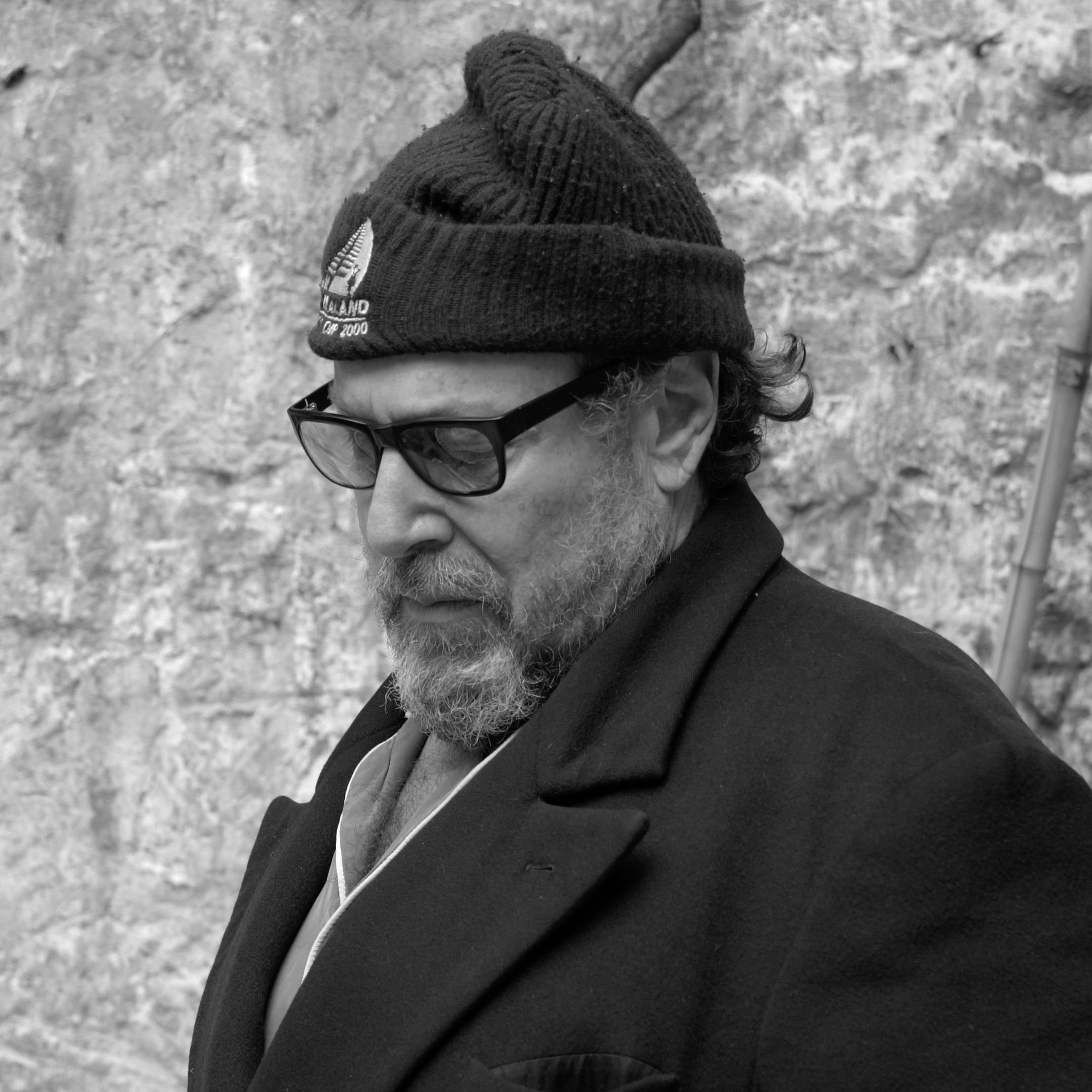
Julian Schnabel. Photo: Louise Kugelberg, 2016
Will St. John
Based in New York, St John’s paintings engage in a kind of period play. He unpacks the motifs, material standards, and stylistic flourishes of old masters—particularly Rembrandt and Vermeer—using them as visual references to recast those around him, often glamorous queer and trans personalities he discovers on social media. (His most recent show, Ride the Tiger at Caelum Gallery, abounded with such subjects, outfitted in crisp white neck ruffles, jewels, or posed with clusters of grapes).
St John became interested in painting during college, when a friend showed him Anne-Louis Girodet de Roussy-Trioson’s The Sleep of Endymion (1791), based on the ancient Greek narrative. Its themes are enduring—beauty fetishism, possessiveness, the desire to preserve youth or at the very least, stall death—and still intrigue St John. His deft, meticulous and sensuous images, made exclusively with oils, are meditations on classical beauty, image manipulation, fame and time.
In the figurative, time-bending renderings of Will St John, New York personalities—think the actor Hari Nef, actress Patricia Black, gallerist and musician Ruby Zarsky, and the artist’s own children—are cannily inserted into the visual language of Dutch Golden Age masters. In one large-scale portrait, set against a moody sky, the metal bar of a nipple piercing glints on a pale, pert breast; in another, folding drapery is printed with Bape-like camouflage, unrolling in cartoonish clouds of mustard and green.
Photo: Colleen Barry
Sponsors
Principal Sponsors: Agnes Gund, Lucio and Joan Noto, and Pace Gallery
Lead Sponsors: Jill and Darius Bikoff, Jacqueline Brody, Kim Heirston, Dorothy Lichtenstein, Linda Macklowe, Fern and Lenard Tessler, and an anonymous donor
Media Partner: Hamptons Magazine
Visual Arts programs are supported by funding from The Michael Lynne Museum Endowment and The Melville Straus Family Endowment.
Additional support provided by Friends of the Museum: Shari and Jeff Aronson, Amalia Dayan and Adam Lindemann, Onna House, Lisa and Richard Perry, Laurie and Martin Scheinman, Jane Wesman and Don Savelson, and Neda Young
Free gallery admission is sponsored, in part, by Landscape Details.